

Understanding Signal Isolators, Converters, and Interfaces Part 3 breaks down the fundamentals of signal conversion in process control environments. Building on the differences between 4-wire and 2-wire isolators, this video explains how signal converters translate legacy signal types, such as 10–50 mA or voltage signals, into standard 4–20 mA signals used by modern control systems. You’ll learn the key differences between fixed-range, field configurable, and PC-configurable converters, how converters safely step down high-level AC signals using CTs and mini-CTs, and how digital conversion bridges HART® data to MODBUS for seamless PLC and DCS integration. Whether you’re working with legacy equipment or modern digital networks, this video shows how signal conversion ensures accurate, reliable communication across your process.
Watch Part 1: Basics of Signal Isolation
Watch Part 2: 4-Wire vs. 2-Wire Signal Isolators
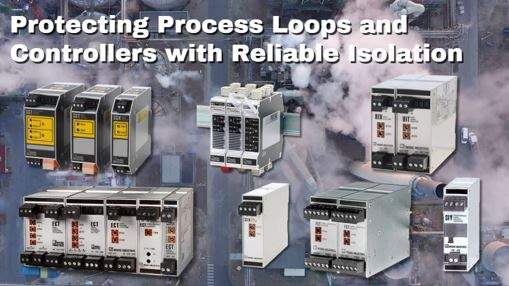
Learn more about Moore Industries Signal Isolation and Conversion Solutions here.